US O-1A Extraordinary Ability, H-1B Modernization, and Global AI Engineer Mobility Trends in 2026
With annual H-1B lottery caps heavily oversubscribed and sponsorship fees rising, AI researchers, machine learning engineers, and startup founders are increasingly utilizing USCIS O-1A STEM evidentiary guidance, EB-2 NIW, and competing fast-track tech visas in Canada and the UK.
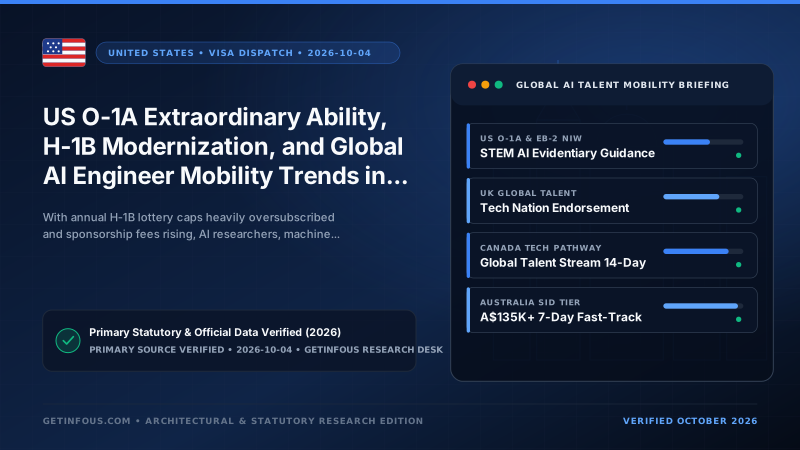
Competition for specialized artificial intelligence and machine learning engineering talent has reshaped global immigration strategy throughout 2026. As technology companies, research laboratories, and venture-backed startups race to build production AI systems, traditional employer-sponsored visa lottery pathways in the United States face intense numerical pressure and rising filing costs. In response, skilled engineers and corporate mobility teams are increasingly turning toward merit-based petitions—most notably the US O-1A extraordinary ability classification and the EB-2 National Interest Waiver (NIW)—alongside targeted STEM immigration streams in Canada, the United Kingdom, and Australia.
In the United States, updated policy guidance from US Citizenship and Immigration Services (USCIS) regarding STEM and artificial intelligence professionals has clarified how machine learning engineers, research scientists, and technical founders can satisfy the O-1A evidentiary criteria. Unlike the H-1B specialty occupation visa, which is subject to a strict annual statutory cap and random beneficiary-centric lottery selection, the O-1A visa has no annual numerical ceiling and can be filed year-round with premium processing. Under the clarified guidance, adjudicators evaluate totality-of-evidence submissions that may include high-impact open-source model or software repository contributions, peer-reviewed conference publications (such as NeurIPS, ICML, or ICLR), critical engineering leadership at distinguished AI organizations, benchmark-setting technical architectures, and competitive total compensation packages including equity.
Similarly, for long-term permanent residence planning, the EB-2 National Interest Waiver (NIW) continues to attract senior AI infrastructure engineers and researchers whose work holds substantial merit and national importance. Because the EB-2 NIW allows qualified individuals to self-petition without requiring a permanent labor certification (PERM) or a single tied employer sponsor, it offers significant career mobility for engineers working on foundational AI safety, semiconductor optimization, healthcare diagnostics, or cybersecurity systems. However, applicants must still account for visa bulletin priority date backlogs depending on their country of birth.
Outside the United States, competing technology hubs have refined their own fast-track pathways to attract international AI specialists who wish to avoid lottery uncertainty. In Canada, Immigration, Refugees and Citizenship Canada (IRCC) continues to utilize category-based selection draws within Express Entry Alongside the Global Talent Stream, which provides expedited two-week work permit processing for high-growth technology employers hiring specialized software and machine learning engineers. In the United Kingdom, the Global Talent visa route—endorsed through Tech Nation criteria for digital technology leaders and exceptional promise candidates—allows top AI engineers to live and work in the UK without requiring a traditional Skilled Worker employer sponsorship license or meeting rigid occupation-code salary minimums.
For individual AI engineers and hiring managers alike, the key lesson of 2026 is portfolio preparation and multi-jurisdictional flexibility. Engineers who systematically document their technical impact—preserving verifiable metrics on production system latency reductions, open-weights benchmark evaluations, technical committee reviews, patent filings, and industry citations—are far better positioned to qualify for cap-exempt merit pathways such as the US O-1A or UK Global Talent visa. As always, because adjudication standards, filing fees, and priority date cutoffs evolve regularly, prospective applicants should verify current requirements directly on official government portals such as USCIS, IRCC, and UK Home Office before initiating a filing.
Every dispatch published by the GetInfoUs Research Desk is cross-checked against primary government statutes, official provider documentation, and reproducible benchmark datasets before publication.
Related reading
Benchmark scores, token prices, and rate limits evolve rapidly as AI labs release model updates. Always verify current specifications and pricing on the official provider documentation.